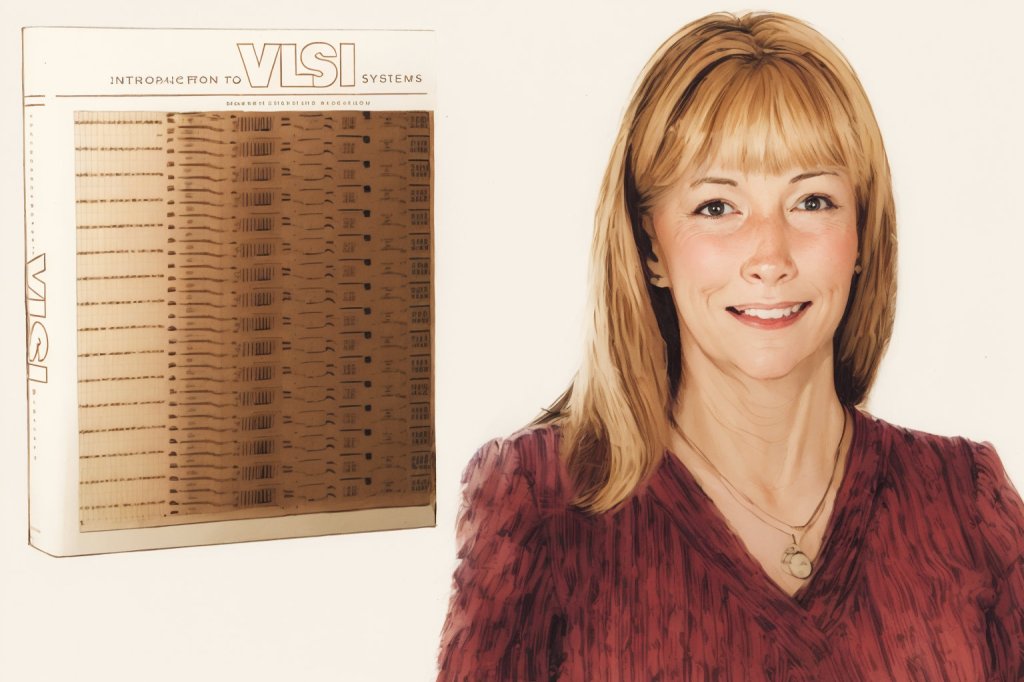
This past weekend, The New York Times ran an obituary for Lynn Conway, half of the namesake for the Mead-Conway VLSI Revolution and co-author of the groundbreaking textbook Introduction to VLSI Systems (1980). She died at the age of 86.
What is so cool about the Mead-Conway VLSI chip design revolution was not only that it was the paradigm shift that made possible the next step in microprocessor design and fabrication by enabling electrical engineering and computer science students to do the work that was previously the domain of physicists and the high tech industry, but also that it was a under-the-radar pedagogical hack. Conway writes in the October 2018 issue of Computer:
"With all the pieces in place, an announcement was made on ARPANET to electrical engineering and computer science departments at major research universities about what became known as "MPC79." On the surface, while appearing to be official and institutionally based, it was done in the spirit of a classic "MIT hack"--a covert but visible technical stunt that stuns the pubic, who can't figure out how it was done or what did it. (I'd been an undergrad at MIT in the 1950s).

The bait was the promise of chip fabrication for all student projects. Faculty members at 12 research universities signed on to offer Mead-Conway VLSI design courses. This was bootleg, unofficial, and off the books, underscoring the principle that "it's easier to beg forgiveness than to get permission" (p. 69).
While this was a huge contribution to the development of the computer industry leading into the 1980s and beyond, it was only one of her many accomplishments–innovating an out-of-order queuing processing system for IBM only to be fired in 1968 when she began transitioning to become a woman, starting her career over and eventually making her way to Xerox PARC, later joining the University of Michigan as a professor of electrical engineering and computer science and serving as associate dean of engineering, and becoming a transgender advocate later in life. She was recognized with many awards and honorary doctorates for her contributions to the field as an engineer and educator.
