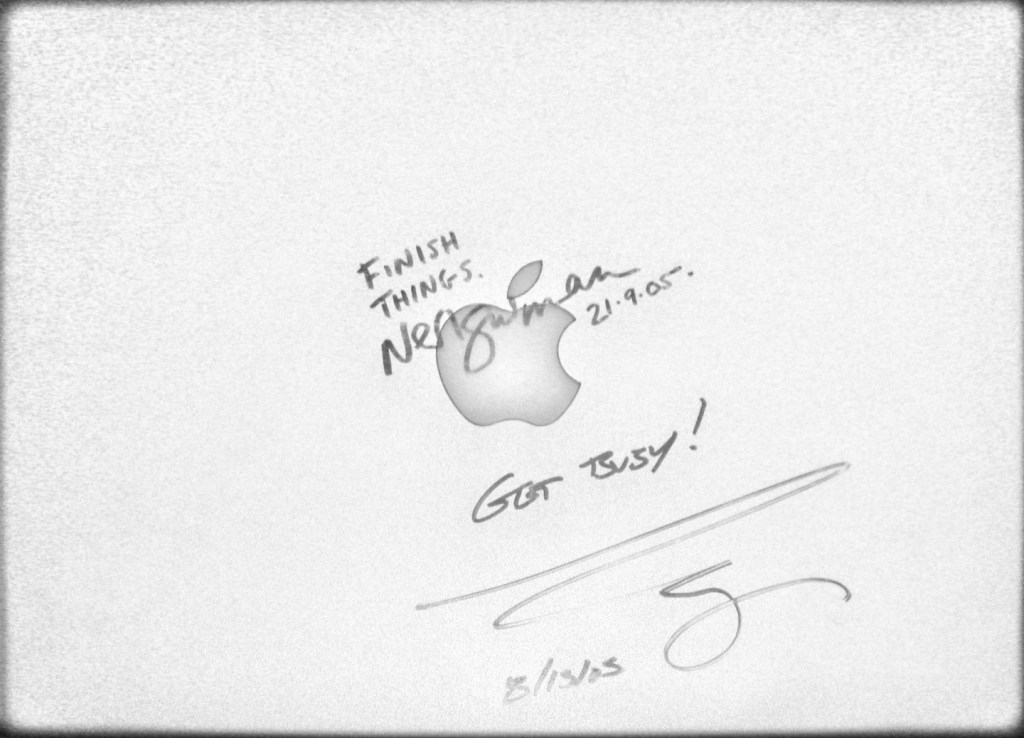
In 2005, I had the pleasure of meeting Neil Gaiman and Bruce Campbell during their separate book tours (Anansi Boys for Gaiman and If Chins Could Kill for Campbell). I asked each of these great people for advice on writing, which they committed to the front of my old 12″ Powerbook G4.
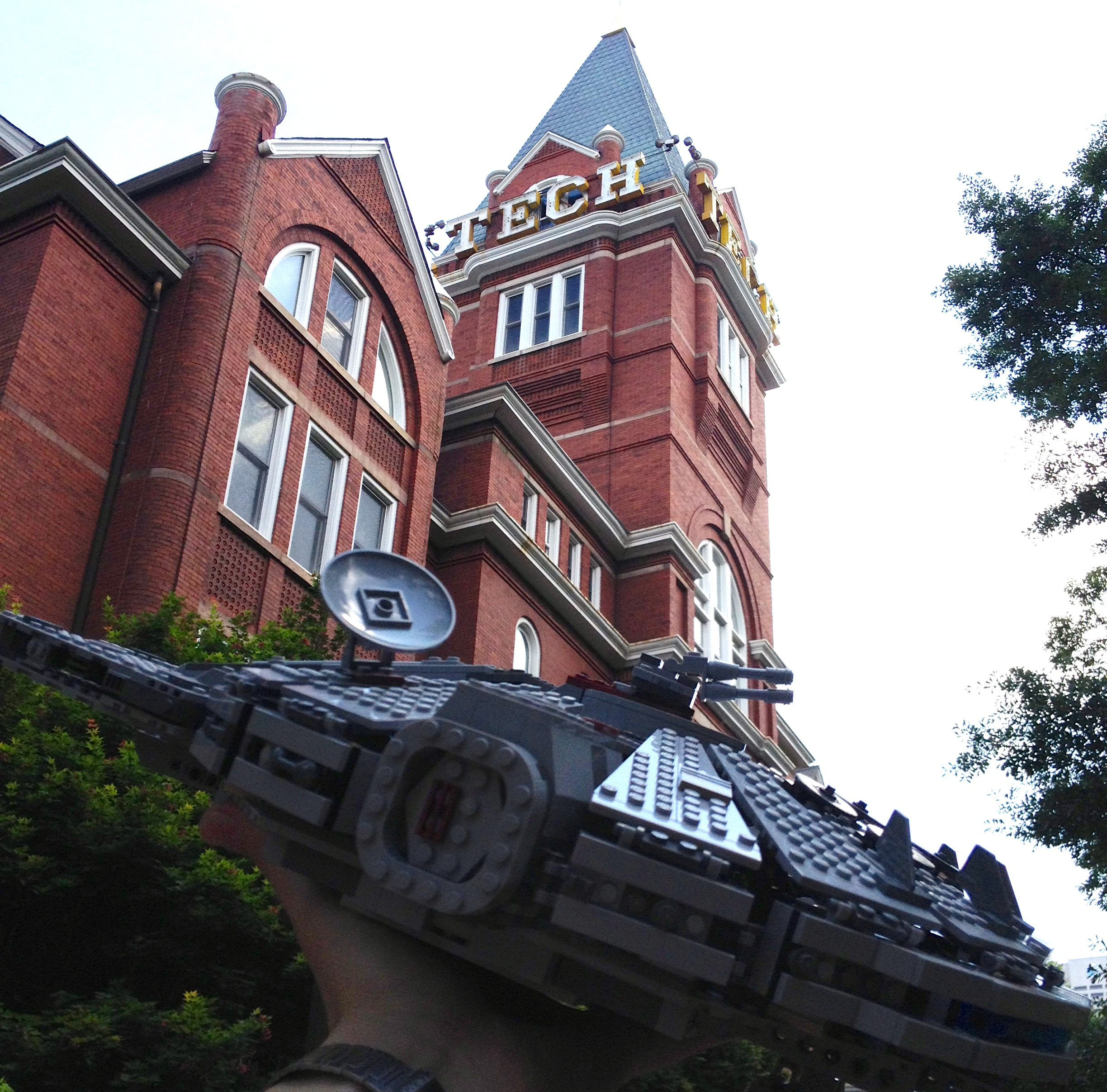
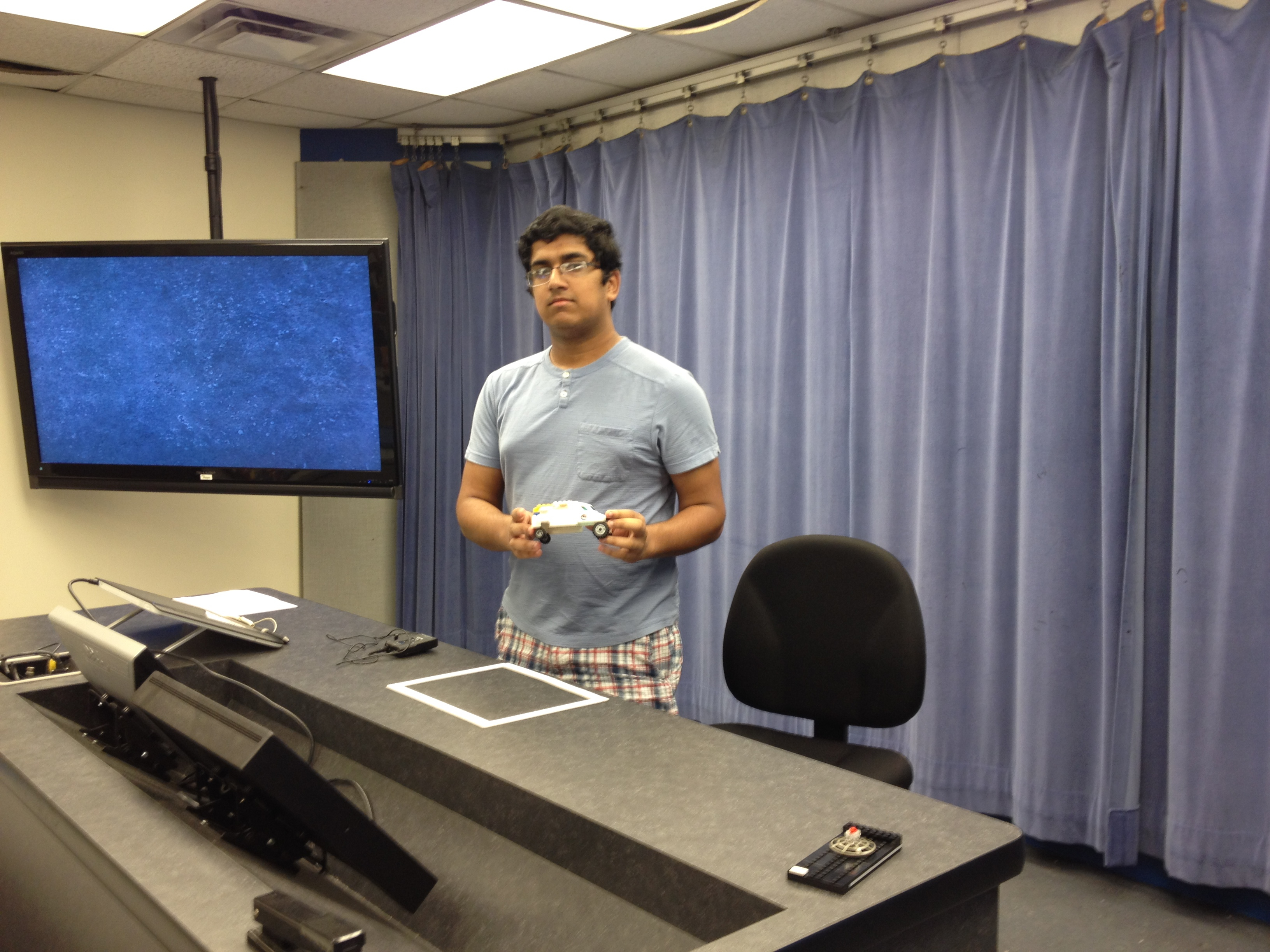
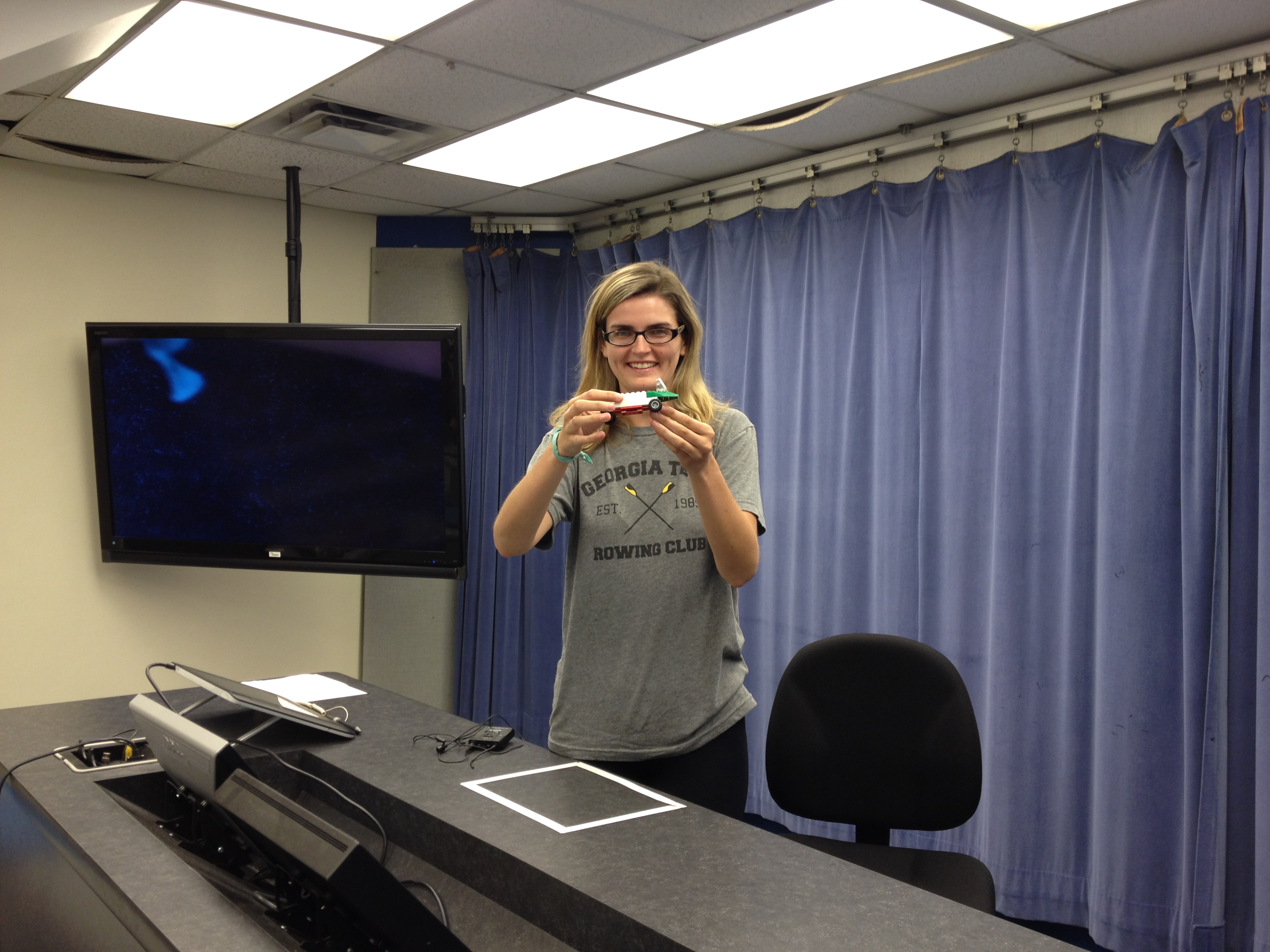
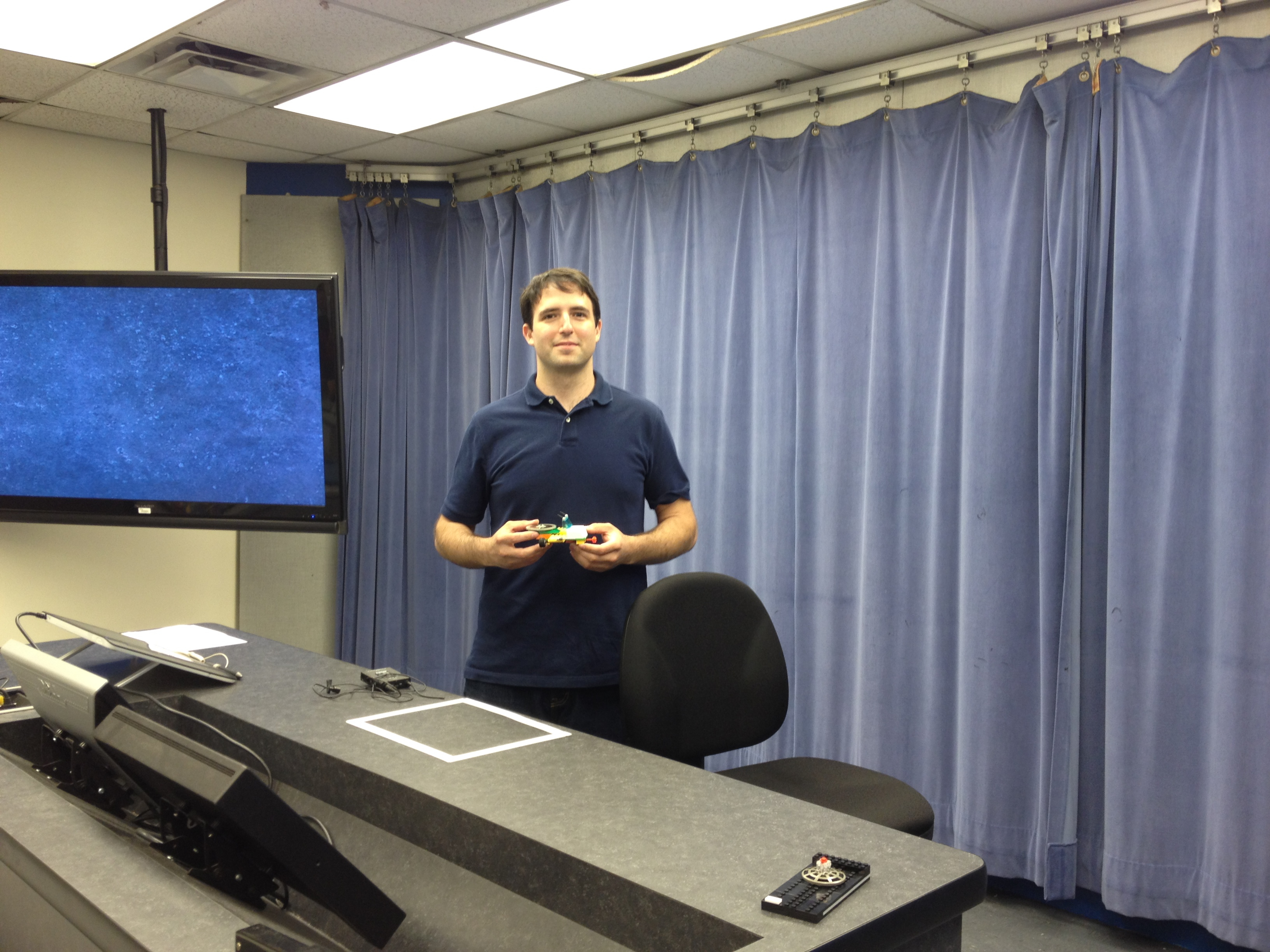
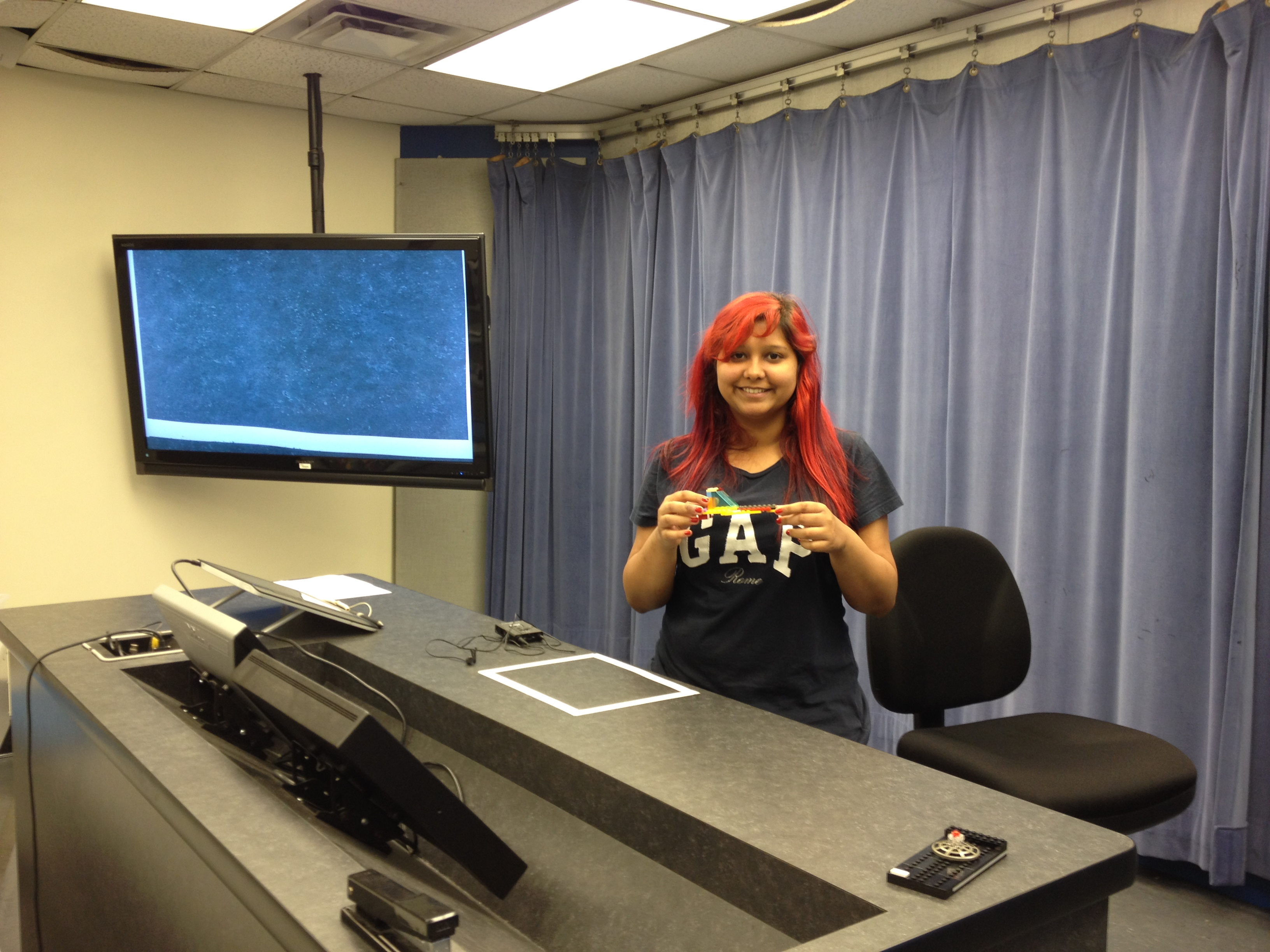
Before closing out the last class that I would teach at Georgia Tech as a Brittain Fellow, I brought a great big container of LEGO bricks to class for my students to explore and enjoy thinking about science fiction with haptics. As I had done last year, I invited my students to think of something from their experience of science fiction that emblematized what science fiction means to them. Put another way, I asked them to build a model of the thing that first comes to mind when they think of science fiction. It could be a robot, blaster, rocket, cyborg, computer, spaceship, etc. Whatever it was, I wanted them to use the available bricks to build an approximation of the thing, present their model to the class, and explain its provenance. I would add to each presentation of a LEGO MOC (my own creation) with additional SF examples and historical relevances.
The challenge to this assignment was that 2/3 of the class were taking the course remotely online. While I invited students to build something and share it on Twitter, few did or were able to do so before class that day. One online student joined us for the on-campus class, which added one more student to the mix and was much appreciated by me and his peers.
After giving instructions and discussing haptics, I gave the students about 25 minutes to find bricks and build their models.
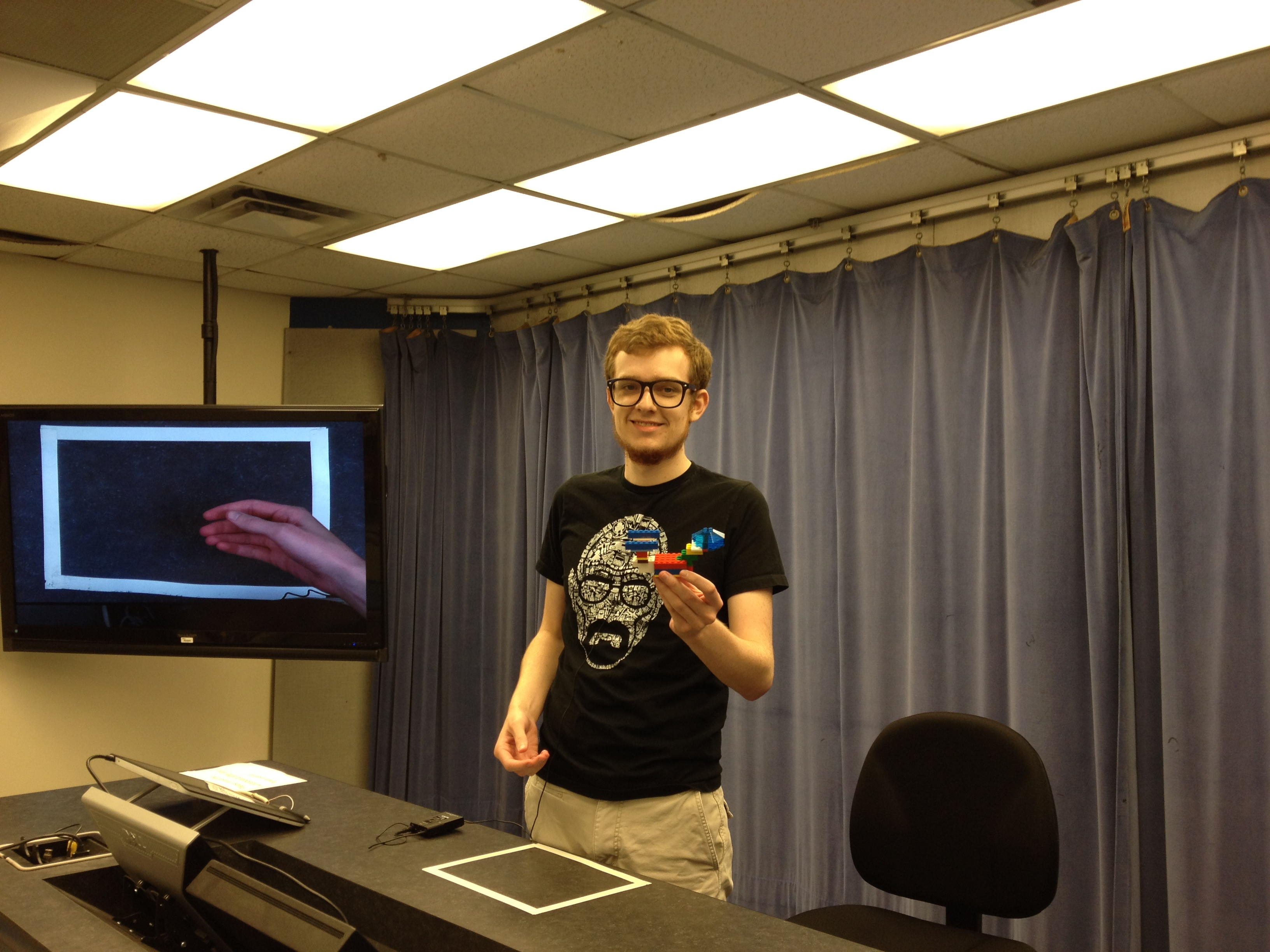
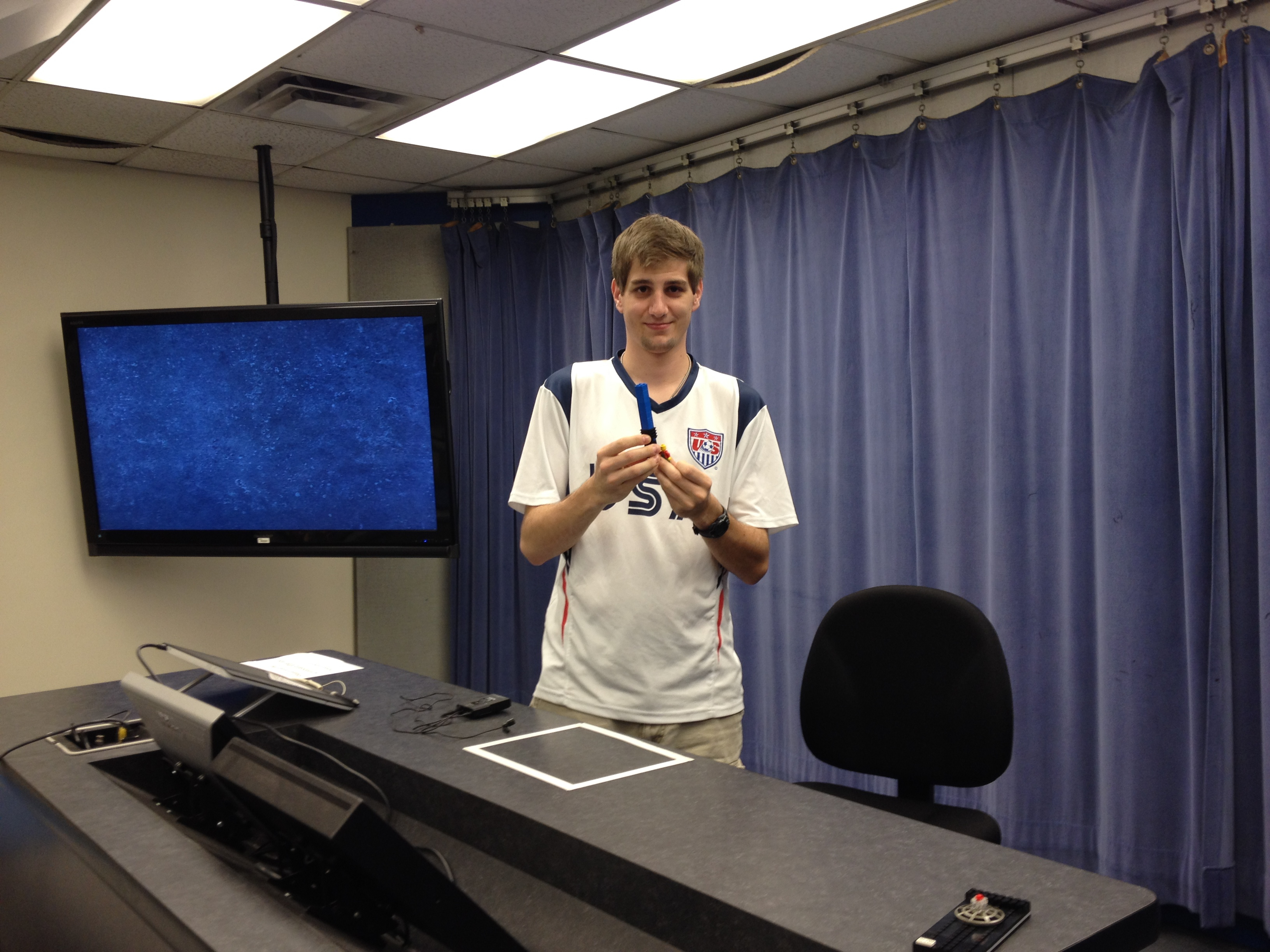
Then, students were invited to come to the front of the class, place their model under the document camera for the benefit of online students, and tell us about their creation and its inspiration to them.
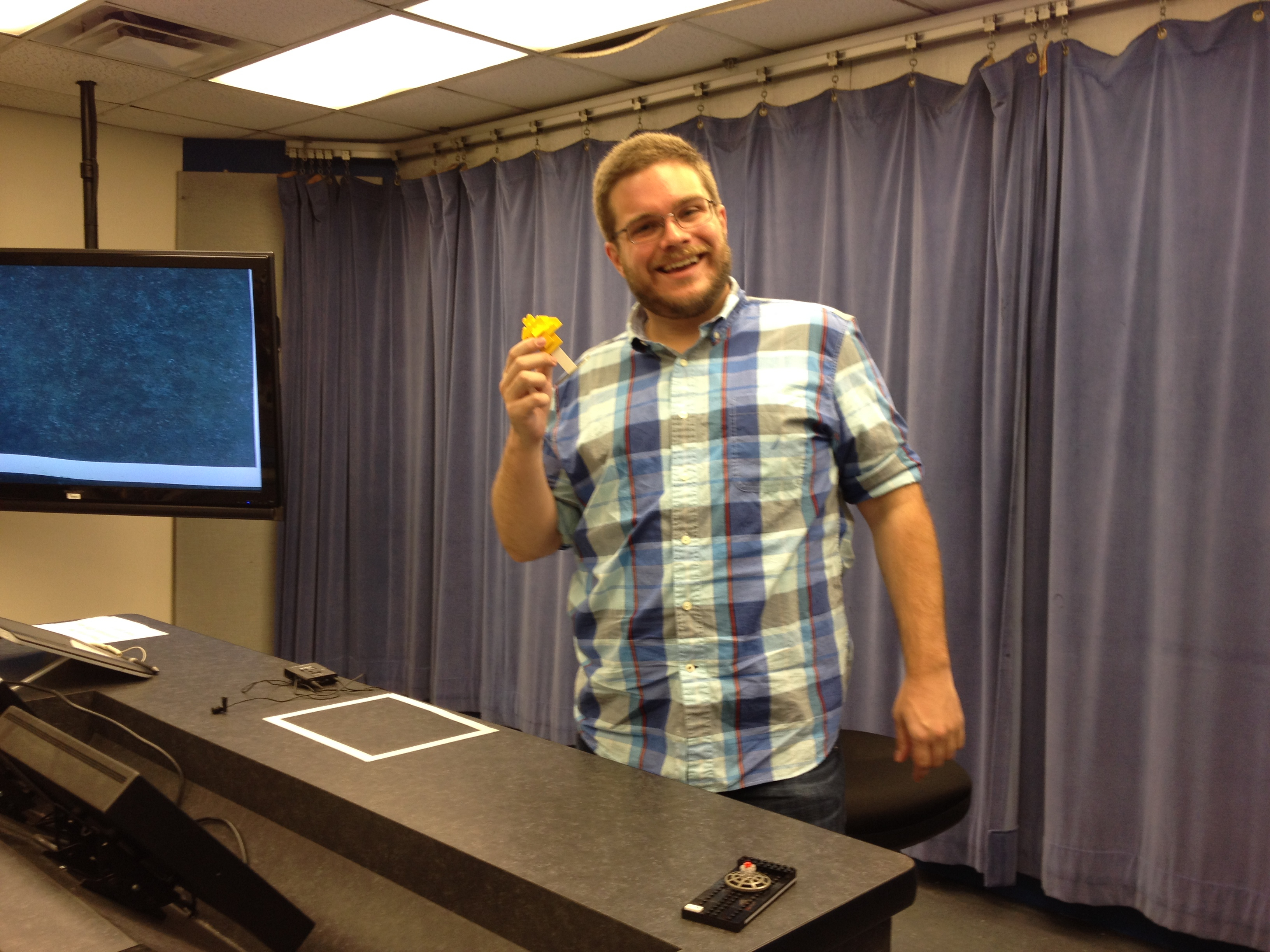
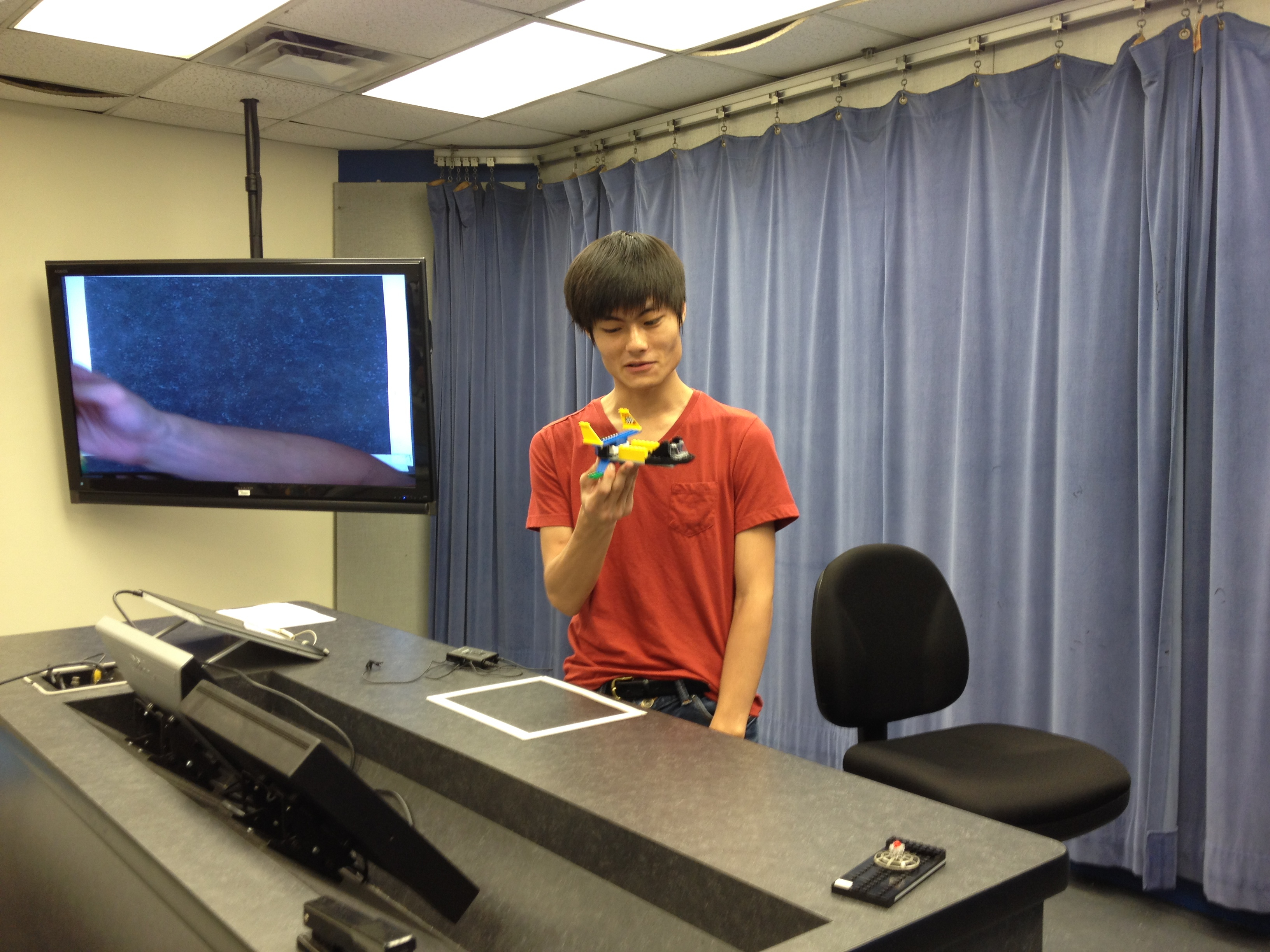
Matthew and his model of the Starship Enterprise NCC-1701-D from Star Trek: The Next Generation.Jarad and his Jedi lightsaber from Star Wars.Aditya and his moon rover.Lauren and her planetary rover.Tyler and his TARDIS.James and his spacecraft.Peter and his flying car.Roxanne and her spacecraft.James and his Daban Urnud ship from Neal Stephenson’s Anathem.Sang and his futuristic aircraft.
I was proud of the creations and connections that my students made during this end-of-semester exercise. Despite a number of same types of SF emblems (air/spacecraft), each student assumed a different approach and had different points of origin for their inspiration. Also, no two models were alike. Each one is a expression of the individual using a three-dimensional modeling art and design form–LEGO.
Besides drawing on different kinds and ways of thinking for this exercise, I know from students comments that they appreciated having a creative outlet in the class beyond their analytical final papers, which are creative in other ways (argumentation, research, prose writing, professional formatting/design, etc.).
Some of them choose to keep their models while others let me keep their models to show future students.
LMC3214, Summer 2014 Class Photo.
Finally, my Science Fiction class would not have been possible without the technical support of Ted Skirvin, who worked with me to use the affordances of the room with my teaching style while accommodating the needs of online students.
Ted Skirvin of Georgia Tech’s Global Learning Center.
This is the sixty-third post in a series that I call, “Recovered Writing.” I am going through my personal archive of undergraduate and graduate school writing, recovering those essays I consider interesting but that I am unlikely to revise for traditional publication, and posting those essays as-is on my blog in the hope of engaging others with these ideas that played a formative role in my development as a scholar and teacher. Because this and the other essays in the Recovered Writing series are posted as-is and edited only for web-readability, I hope that readers will accept them for what they are–undergraduate and graduate school essays conveying varying degrees of argumentation, rigor, idea development, and research. Furthermore, I dislike the idea of these essays languishing in a digital tomb, so I offer them here to excite your curiosity and encourage your conversation.
When my dissertation defense date approached and my dissertation was completed, I wanted to help myself recall my arguments and examples more clearly. To that end, I wrote out by hand short summaries of each paragraph in my dissertation, which you can read as this PDF. I divided my handwritten notes by chapter and section. Each paragraph summary contains the main thought and a brief synopsis of examples or other supporting evidence. In some ways, it is like a reverse outline, but the dissertation was already completed and the summaries were not used for reorganizing the layout/arrangement of the dissertation’s logic. I am currently sending an expanded version of my dissertation around for possible publication. This PDF of my dissertation paragraph summaries are not the original form of the dissertation–only a summarization of each of its constituent paragraphs. For my students, I recommend this exercise–summarizing essay paragraphs during drafting to help you think about the logical order of your essay/argument and to help you know the material better for discussing, teaching, or presenting your work.
In my next Recovered Writing entry, I will post my dissertation defense opening statement. Stay tuned!
This is the sixty-second post in a series that I call, “Recovered Writing.” I am going through my personal archive of undergraduate and graduate school writing, recovering those essays I consider interesting but that I am unlikely to revise for traditional publication, and posting those essays as-is on my blog in the hope of engaging others with these ideas that played a formative role in my development as a scholar and teacher. Because this and the other essays in the Recovered Writing series are posted as-is and edited only for web-readability, I hope that readers will accept them for what they are–undergraduate and graduate school essays conveying varying degrees of argumentation, rigor, idea development, and research. Furthermore, I dislike the idea of these essays languishing in a digital tomb, so I offer them here to excite your curiosity and encourage your conversation.
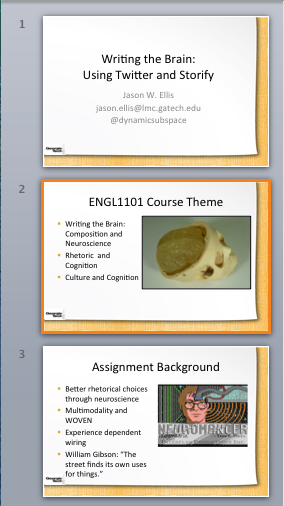
In this Recovered Writing post, I am including two PDF files that I used in my presentation on “Writing the Brain: Using Twitter and Storify” for the 2 October 2013 CETL Brown Bag Workshop. The first is my PowerPoint presentation file and the second is my handwritten presentation notes. Normally, I type up a carefully written script for my presentations, but in this case, I wrote my speaking notes out by hand. While I was driven my a tight deadline imposed by several other responsibilities converging at the same time, I saw this as an opportunity to experiment with a way of presenting that I normally don’t do and I wasn’t completely comfortable doing. As I tell my students, we grow by challenging ourselves, doing new things, and experimenting with new approaches. This was one such attempt on my part.
Since I will be out of town on business during Wednesday’s class, I made this lecture video for my on-campus and off-campus students. It is available as an MP4 on T-Square > Resources, too.
Besides covering proto-SF, Voyages Extraordinaires, and Scientific Romances, we are reading H.G. Wells’ “The Star” and E.M. Forster’s “The Machine Stops.” I am looking forward to reading what everyone has to say on Twitter using the #lmc3214 hashtag!
Next week, we begin discussing the Hugo Gernsback and the SF Pulps!