Category: Pedagogy

  • Down and Dirty Guide to Literary Research with Digital Humanities Tools: Text Mining Basics

    2010-10-05 - IMG_2791
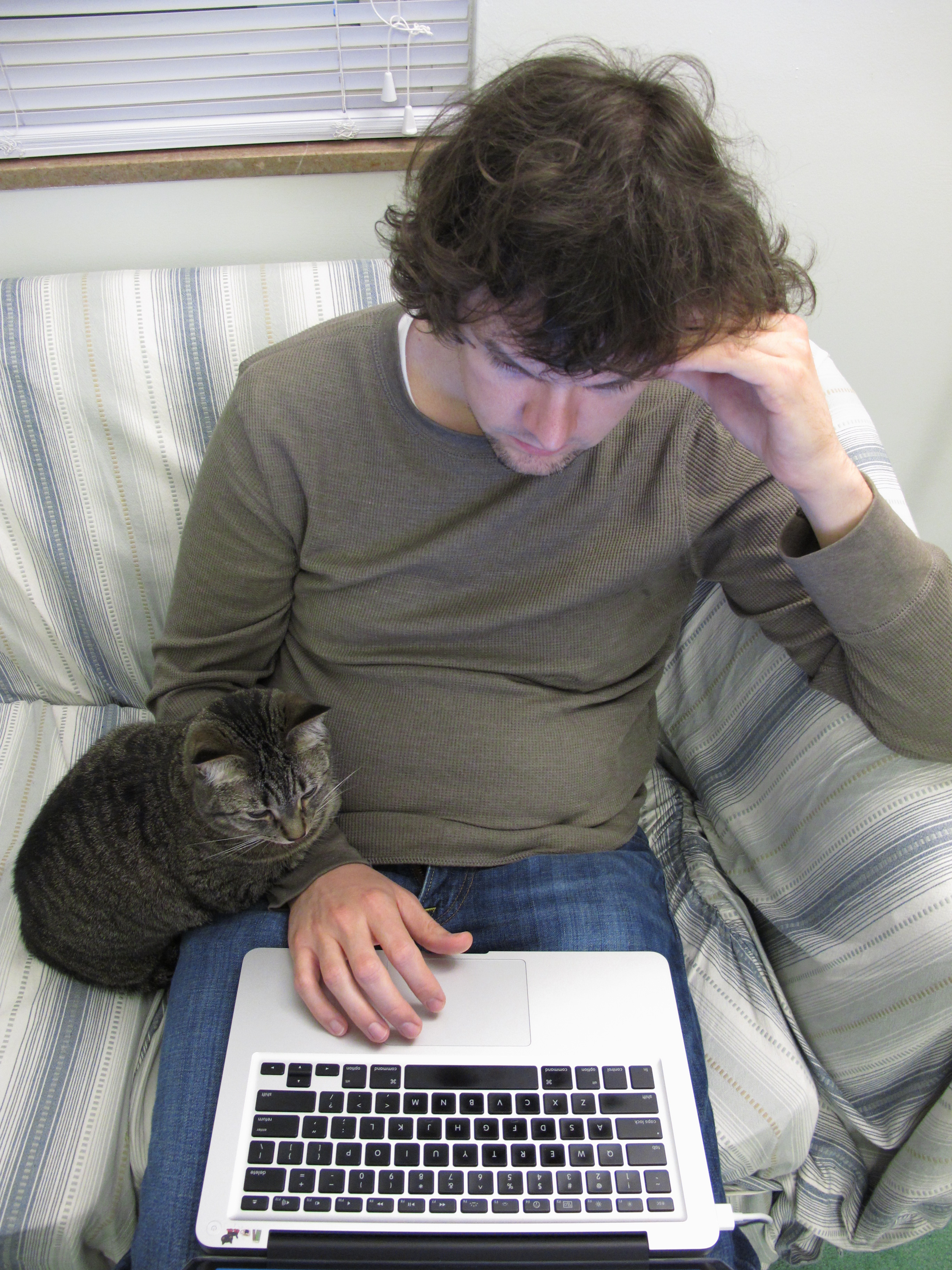
    Miao and Jason get things done with computers!

    As part of the final Digital Pedagogy seminar of fall 2012, Margaret Konkol, Patrick McHenry, Olga Menagarishvili, and I will lead the discussion on “trends in the digital humanities.” You can find out more about our readings and other DH resources by reading our TECHStyle post here.

    As part of my contribution to the seminar, I will give a demo titled, “Down and Dirty Guide to Literary Research with Digital Humanities Tools: Text Mining Basics.” In my presentation, I will show how traditional literary scholars can employ computers, cameras, and software to enhance their research.

    To supplement my presentation, I created the following outline with links to useful resources.

    Down and Dirty Guide to Literary Research with Digital Humanities Tools: Text Mining Basics

    1. Text Analysis and Text Mining
      1. My working definition of text mining: “Studying texts with computers and software to uncover new patterns, overlooked connections, and deeper meaning.”
      2. What is Text Analysis: Electronic Texts and Text Analysis by Geoffrey Rockwell and Ian Lancashire
      3. Text mining on Wikipedia
      4. Text Mining as a Research Tool by Ryan Shaw (an excellent resource with a presentation and links to more useful material on and offline)
    2. Advantages to Digital Research Materials
      1. Ask Interesting Questions That Would Otherwise Be Too Difficult or Time Consuming to Ask
      2. Efficiency
      3. Thoroughness
      4. Find New Patterns
      5. Develop Greater Insight
    3. Types of Digital Research Materials
      1. Your Notes
      2. eBooks
      3. eJournals
    4. Digitizing Your Own Research Materials
      1. What to Digitize
        1. Primary Sources
        2. Secondary Sources
      2. How to Digitize
        1. Acquire
          1. Camera > high resolution JPG
          2. Scanner > high resolution TIFF or JPG
        2. Collate as PDF
          1. Adobe Acrobat X Pro (now XI!)
          2. PDFCreator
          3. Mac OS X Preview
        3. Perform Optical Character Recognition (OCR) to generate machine readable/searchable plain text
          1. Adobe Acrobat X Pro
            1. Print PDF to a letter size PDF
            2. Tool > Recognize Text
          2. DevonThink
          3. Use Google
          4. Others?
        4. Save As/Export plain text > .txt files
        5. Engage the “Text” in New Ways
          1. New Ways of Seeing “Texts”
            1. Keyword Search
            2. Line Search
            3. Word Counts
            4. Concordance
            5. Patterns
          2. Tools to Help with Seeing “Texts”
            1. AntConc
            2. BBEdit (“It doesn’t suck” ®)
            3. MacOS X and Linux: cat, find, grep, and print (use “man cat” and “man grep” to learn more from the Terminal. More info herehere, here, here, and here.)
            4. DevonThink
            5. Notepad++
            6. Mac OS X Spotlight/Windows 7 Search
            7. TextEdit
            8. Others?
    IMG_0987
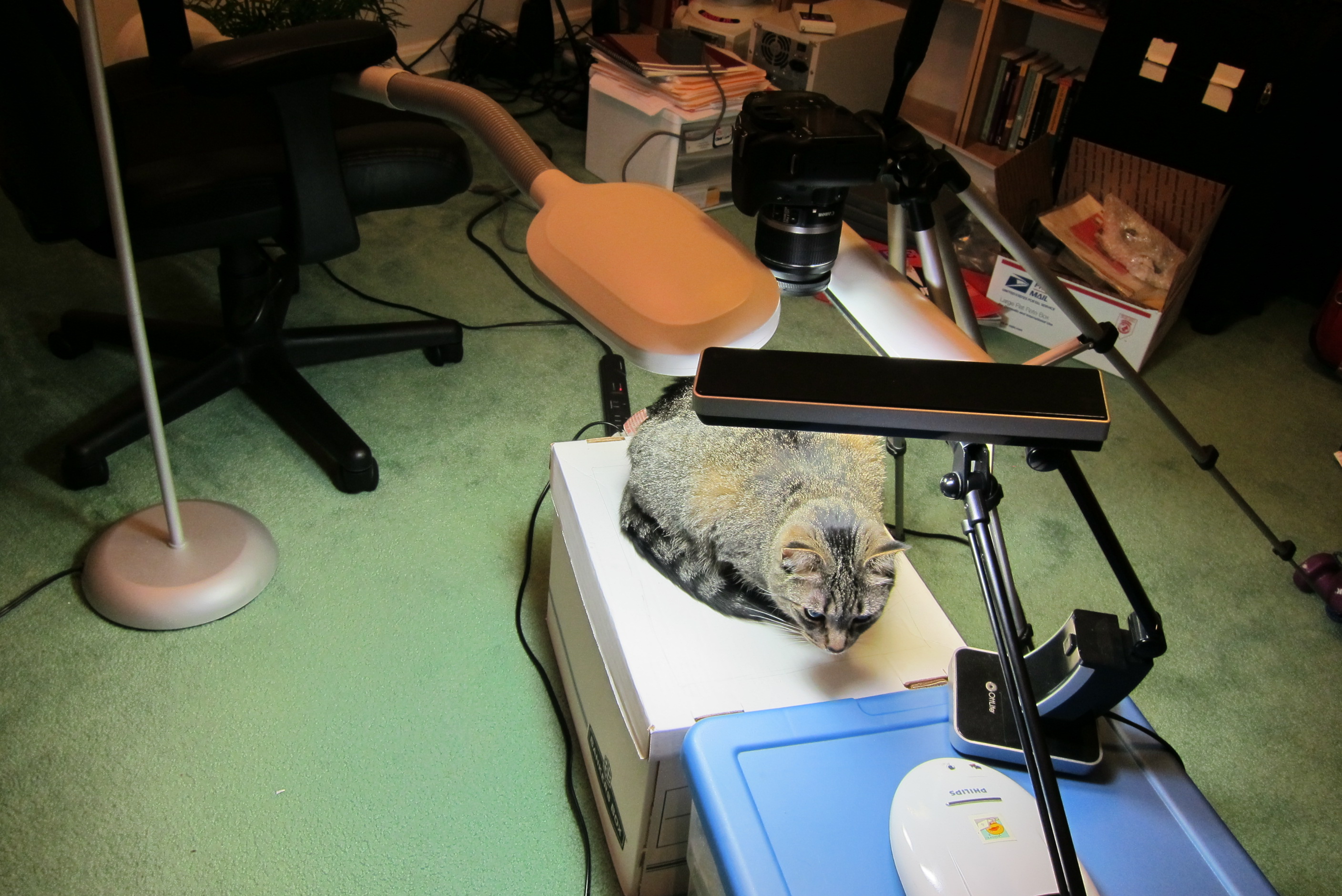
    Miao awaits digitization.
  • Learning and Teaching New Tricks in Technical Communication: Presentations on Single-Sourcing and Digital Literacy

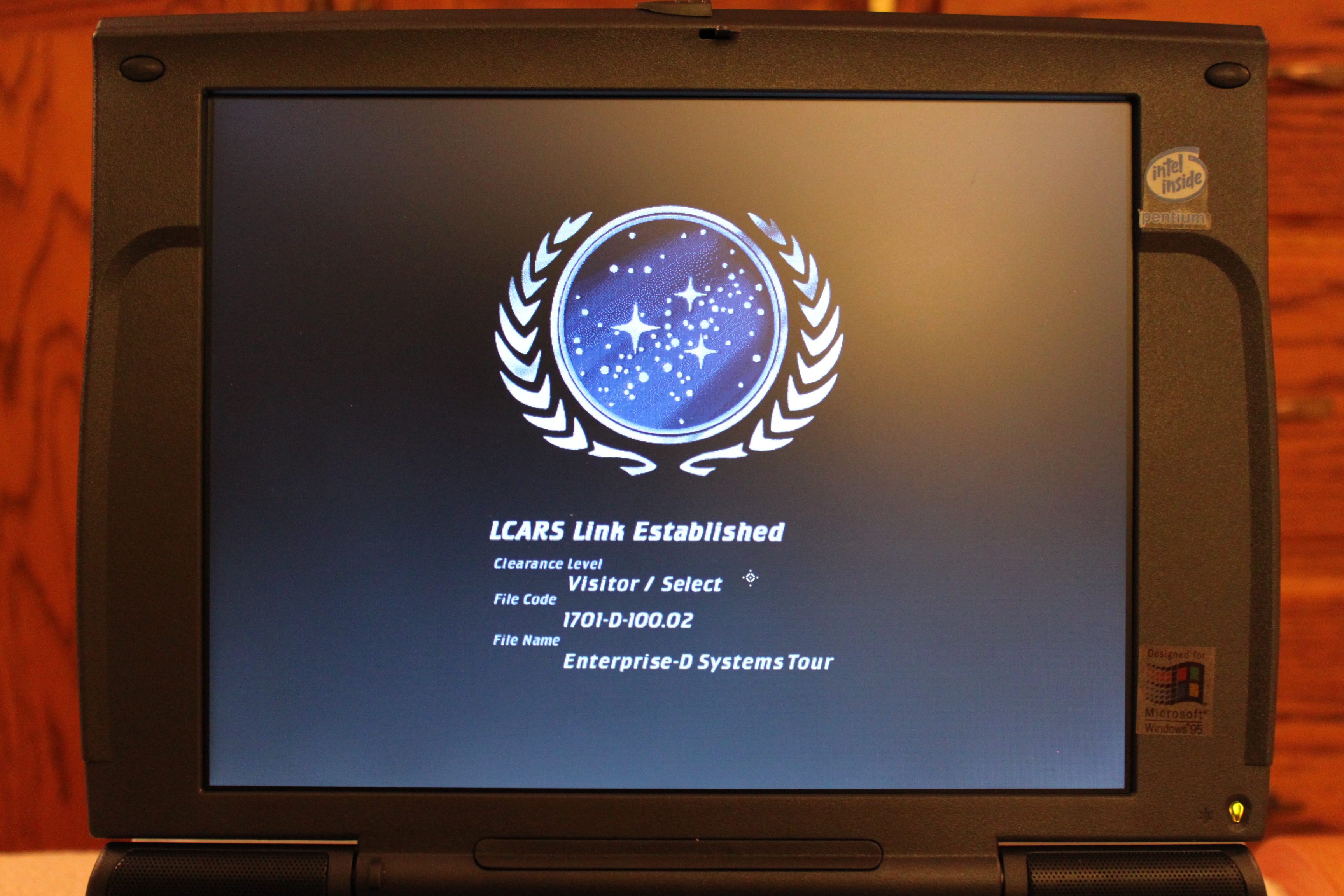
    LCARS Initialization Screen from Star Trek: TNG Technical Manual for Windows 3.1

    As a member of Georgia Tech’s Brittain Fellowship in the Writing and Communication Program, I have the tremendous opportunity to participate in seminars with my peers after the day’s teaching is done.

    All Brittain Fellows are required to participate in the weekly Digital Pedagogy seminar on Wednesday evenings and those Fellows who are specifically teaching technical communication or business writing are also required to join the weekly Technical Communication seminar on Monday nights. Since I am not teaching tech comm but eager to teach it in the near future, I volunteered to join the tech comm folks on Mondays.

    At the beginning of the semester in both seminars, we brainstormed and chose topics to present on. From the list of topics, two people elected to work together to choose readings and guide the discussion. For tech comm, we picked these topics to discuss during the fall semester: Rhetorical vs. Instrumental; Career planning; the Ethos or Soul of Technical Communication; Syntactics, grammar, conventions in tech discourse; Gender and Technical Discourse; Visual literacy; Accessibility issues; Single-sourcing and user experience (UX); Digital Literacy and Social media; Workplace Ethics, Technical Discourse, and Business Culture; Service learning; Orality and Nonverbal Communication in the workplace;  and Disciplinary distinctions and conventions.

    As you might guess from my research interests in digital discourses, I volunteered to present one week on Single-sourcing and user experience (UX) and another week on Digital Literacy and Social media.

    Rachel Mahan and I presented on single-sourcing and user experience on Oct. 29, 2012. After I introduced different approaches and theoretical issues surrounding single-sourcing, Rachel shared her personal workplace experience with single-sourcing. I also shared firsthand experience from fellow Georgia Tech alums Smitha Prasadh and Andrew Pilsch (many thanks!). You can find our discussion readings and questions on TechStyle here.

    Olga Menagarishvili and I presented on Digital Literacy and Social Media on Nov. 5, 2012. I lead the group through a number of tools for analyzing social media privacy, and Olga prepared a fun active learning “jigsaw” assignment to lead the group toward a deeper discussion of “layered literacies.” You can find our readings, discussion questions, and online resources on TechStyle here.

    I am now developing my first technical communication syllabus and assignments. I have some ideas about how to approach technical communication from simultaneously practical (workplace-oriented) and imaginative (science fictional) directions. I want to guide students to be exemplary technical communicators who capably demonstrate and understand the rhetorical, critical, and ethical dimensions of what that entails. We will see when the opportunity for me to do this will present itself.

  • My Georgia Tech ENGL 1102 Class Description and Reading List for Spring 2012, “The Promise and Peril of the Digital Age Explored Through Science Fiction”

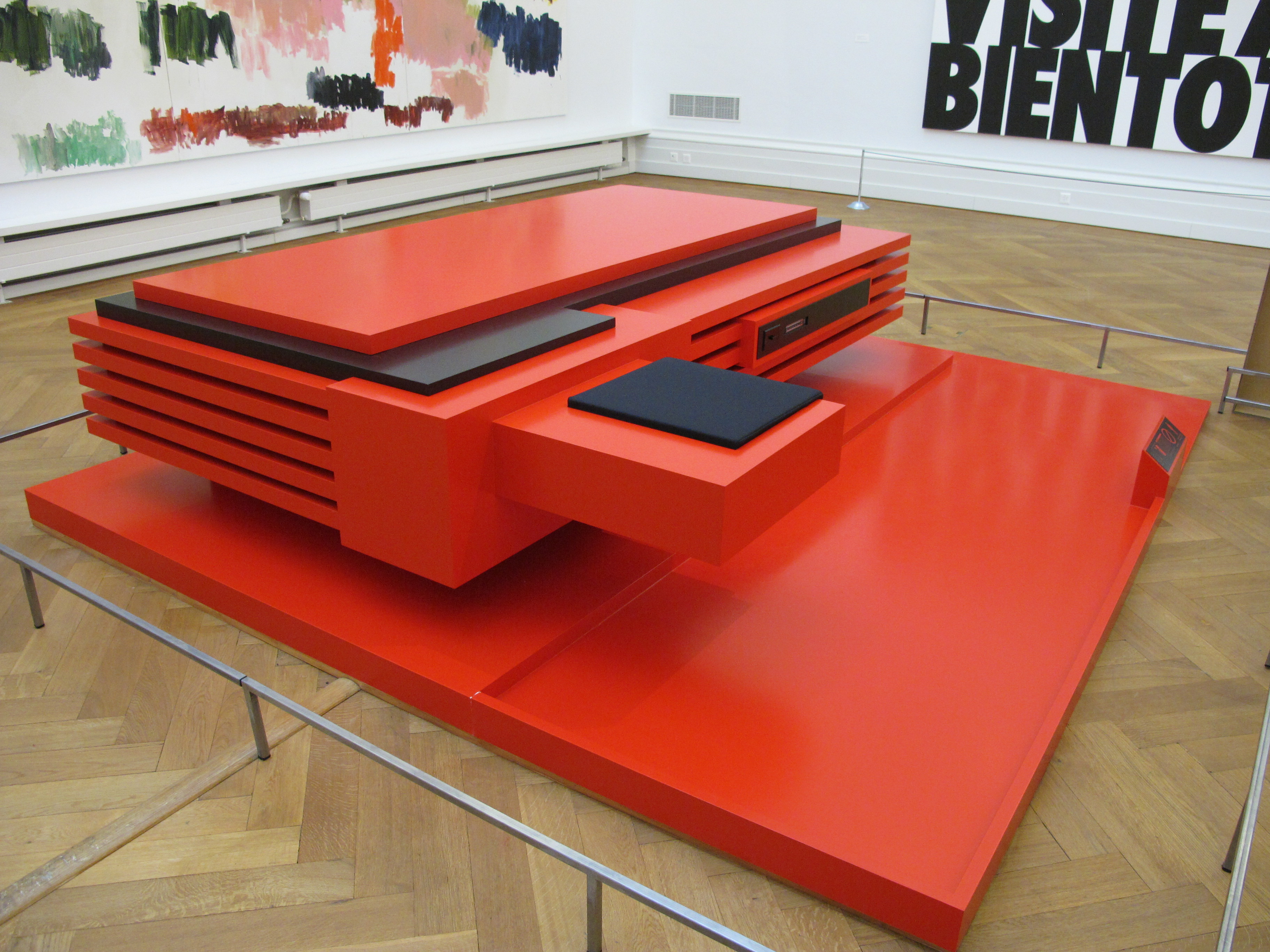
    Martin Widmer’s “Tomb [V’]” (2007).
    [UPDATE: I volunteered to teach three sections of ENGL1101 instead of three sections of ENGL1102 when the school made the request. This gives me an opportunity to immediately revise my ENGL1101 syllabus and try new things with my students!] In Spring 2013, I will be teaching three sections of ENGL 1102 (sections: P1, E, and M). For these sections, I will guide students toward completing and exceeding the desired educational outcomes with a class structured on the them, “The Promise and Peril of the Digital Age Explored Through Science Fiction.”

    Building on the rhetorical strategies and WOVEN modalities introduced in ENGL1101, this class further develops students’ communicative and critical thinking abilities by guiding students through challenging research-based projects. The research focus of this class is on the promise and peril of the contemporary digital age. Science fiction is a uniquely suited genre for considering the digital age, because it is the only literature that is firmly situated at the intersection of science, technology, and culture. Furthermore, science fiction is a literature about the present in which it is written rather than its imagined future. With this in mind, recent science fictions comment on our present and our near future in simultaneously promising and troubling ways. Drawing on science fiction across multiple media (including novels, films, and video games) and using newly acquired tools of critical theory from cultural studies and the study of science and technology, students will develop a number of research-based projects individually and collaboratively that explore how science fiction informs and critiques the on-going digital age. All of these projects will culminate in or include a digital component (e.g., blog posts, Twitter essays, Storify curations, online videos, and Omeka archives). Also, students will learn how to use digital humanities technologies to inform their thinking and research.

    Reading List:

    Oryx and Crake, Margaret Atwood, Anchor, 2004, 978-0385721677

    Ready Player One, Ernest Cline, Broadway, 2012, 978-0307887443

    Neuromancer, William Gibson, Ace, 2000, 978-0441007462

    River of Gods, Ian McDonald, Pyr, 2007, 978-1591025955

    Rainbows End, Vernor Vinge, Tor, 2007, 978-0812536362

    Online reading:

    Little Brother, Cory Doctorow [available here]

    Game List:

    CYPHER: Cyberpunk Text Adventure [available here]

    I am still developing the class syllabus and assignments. When these are completed, I will post copies in a subsequent post.

  • My ENGL 1101 Syllabus for “Writing the Brain: Composition and Neuroscience”

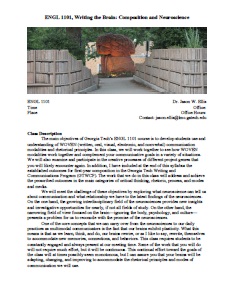
    My English composition students at Georgia Tech are now well into their second major project, so I figured that I should get in gear and post my syllabus for my newly designed, WOVEN (written, oral, visual, electronic, and nonverbal) focused ENGL 1101 syllabus. The title of my class is “Writing the Brain: Composition and Neuroscience.” Unlike the previous iteration of this class at Kent State called “The Brain and Writing,” I overhauled the whole class to only use nonfictional readings and more strongly emphasize multimodality in assignments and discussion. So far, I am very pleased with the results as demonstrated by the great work and commitment of my students. If you would like to read my syllabus, you can download it as a PDF here: ellis-jason-fall2012-1101-syllabus.

  • Learning from our Grandmothers: Memories of my Granny Ellis (1918-2012)

    Papa and Granny Ellis with me after high school graduation in 1995.

    Early Monday morning, I received an unexpected phone call from my Dad. Obviously upset, he told me that my Granny Ellis had passed away during the night. It was hard to wrap my head around this fact. She was 94 years old, and she marshaled on despite numerous health problems–especially later in life. She was from “old stock,” a heartier stock that could weather setbacks and troubles without much complaint or fuss.

    She was my last grandparent to pass away. I am very fortunate to have had so much time to spend and learn from my grandparents. Wilma, Papa Gerald, Papa Ellis, and Granny Ellis contributed in so many ways to my emergence as the person that I am today. I feel somewhat disconnected now from the past anchored by my grandparents–grandparents who I spent time with every day, every week, every summer when I was younger and who I called once a week no matter where I might be in: in Atlanta, Liverpool, or Ohio.

    There are  a couple of things that immediately come to mind in remembering Granny Ellis. The first has to do with food and the second has to do with the surprising power of memory.

    When I was younger, I would usually spend Wednesday afternoons and some weekends with my Granny and Papa Ellis. More often than not, I wanted to “play” with my Legos or other toys, but what no one knew–even myself–was that I was learning. I was modeling. I was thinking through narrative. I was thinking about the possibilities in social interaction, engineering, and creativity.

    Granny Ellis let me explore through my play without interruption–except when it was necessary, as she would remind me, to eat. She believed in making sure that I was well fed. With energy stores fulfilled, she would release me from an empty bowl of chili or a now barren plate where once sat made-from-scratch biscuits to return to my building, my thinking, my “play.” In her own way, I believe that she recognized that I needed to do those things to make sense of a world far different from the one she was born into so many years before. She recognized that even play is an important part of learning.

    Then, many years after those afternoons on the carpeted floor hunting for the right brick, Granny Ellis developed neurological problems. Papa Ellis would need to guide Granny around. It was like she was there, trapped behind her eyes, unable to express herself as she had when I was younger. However, her doctors began experimenting with different medicines to combat what were ultimately long undiagnosed micro-seizures and dementia, she regained to some extent her old self. You could speak with her once again and she could recall the past remarkably well. Unfortunately, her short term memory was impaired–she could not remember from day-to-day or even minute-by-minute on most occasions.

    Due to Granny Ellis’ trouble with short term memory, I expected her to not remember my wife Y after I introduced her. To my overwhelming joy, Granny Ellis not only remembered that I was married to a beautiful girl named Y, but she also remembered to ask how Y and I were doing. Granny’s face would light up when she saw Y on the too few occasions that we could both travel to Brunswick to visit. Despite these few encounters, Granny Ellis overcame her brain’s degenerative hurdles to hold on to that memory. Did her love for Y and me play some role in her brain’s ability to build a lasting long term memory from her short term memory? This question deserves further investigation. In the meantime, I believe that she expressed her love through her memory of Y, and I am glad that I now have that memory to hold onto in my life.

    Our friends and family (and especially our grandmothers) have a lot to teach us. We can learn from them and our experiences. We can reflect on what they did–how they demonstrated solid pedagogical practices for learning and enabling learning–in our own thinking about the theory and practice of teaching.