In 2010, Y and I went on a day trip to Pittsburgh to look around before going to Ikea to pick up some new furniture. My favorite place in Pittsburgh is the Cathedral of Learning at the University of Pittsburgh, which I made use of when I lived there, so we made that one stop on our itinerary.
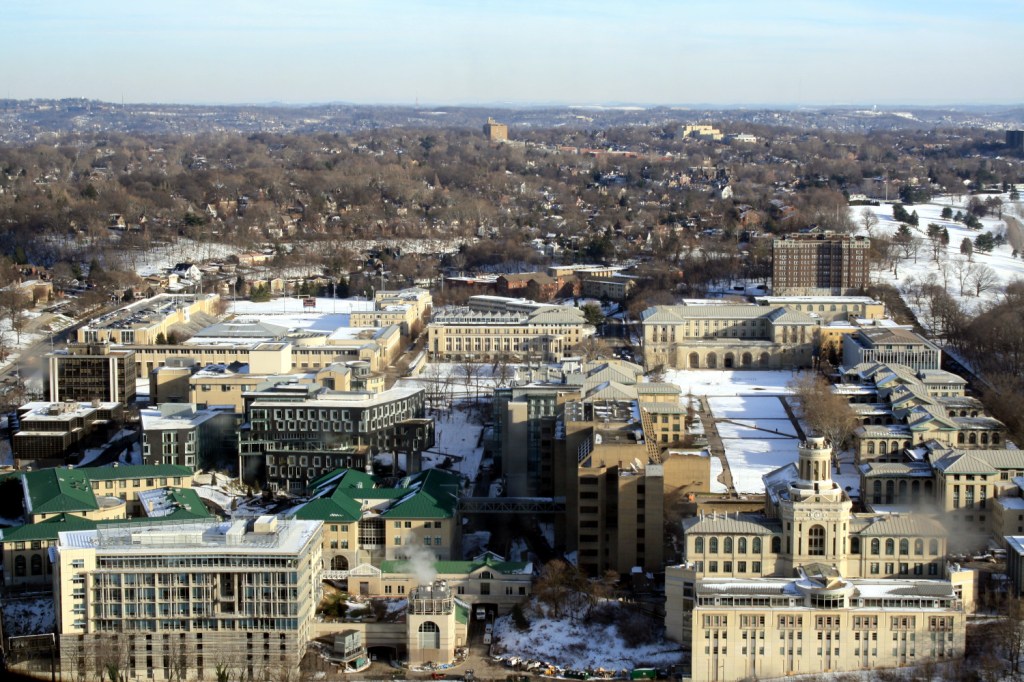
From a distance, it is an easy to see landmark for getting around the University of Pittsburgh campus.
Standing at its entrance, the building’s magnitude is unavoidable. And, to think that this gigantic building–the second tallest educational building in the world–is dedicated to learning.
It’s interior first floor study space is equally impressive. This cavernous space lends itself to individual and collaborative work.
From an upper floor, you can look east to see Carnegie Mellon University.
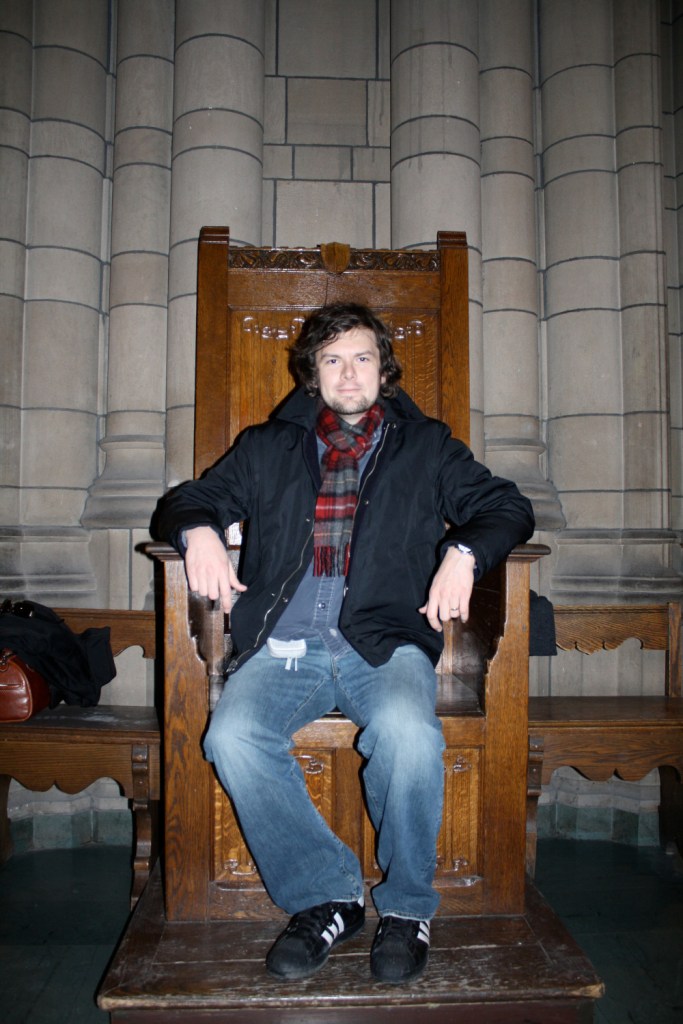
Before leaving, Y took a photo of me sitting in one of the big chairs in the study area on the first floor of the Cathedral of Learning.
I think that all universities should invest in basic studying and learning spaces where students can work individually and together. It can be something as architecturally impressive as the Cathedral of Learning, or it could be something designed around sustainability and efficiencies such as Georgia Tech’s Clough Undergraduate Learning Commons. Whatever form it takes, it should center on students and their needs whether they live on campus or commute. Essentially, students need space to study, work, and collaborate outside of the classroom.
    Alas, poor Yorick! I knew him, Horatio: a fellow
    of infinite jest, of most excellent fancy: he hath
    borne me on his back a thousand times; and now, how
    abhorred in my imagination it is! my gorge rims at
    it. Here hung those lips that I have kissed I know
    not how oft. Where be your gibes now? your
    gambols? your songs? your flashes of merriment,
    that were wont to set the table on a roar? Not one
    now, to mock your own grinning? quite chap-fallen?
    Now get you to my lady's chamber, and tell her, let
    her paint an inch thick, to this favour she must
    come; make her laugh at that. -Shakespeare, Hamlet
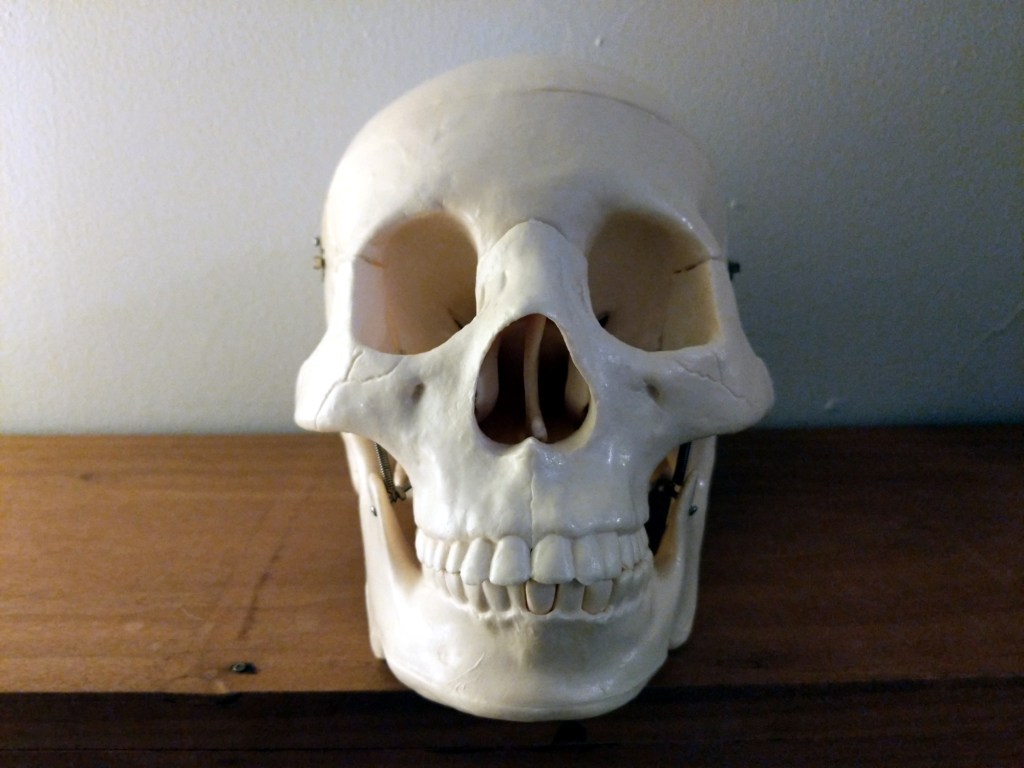
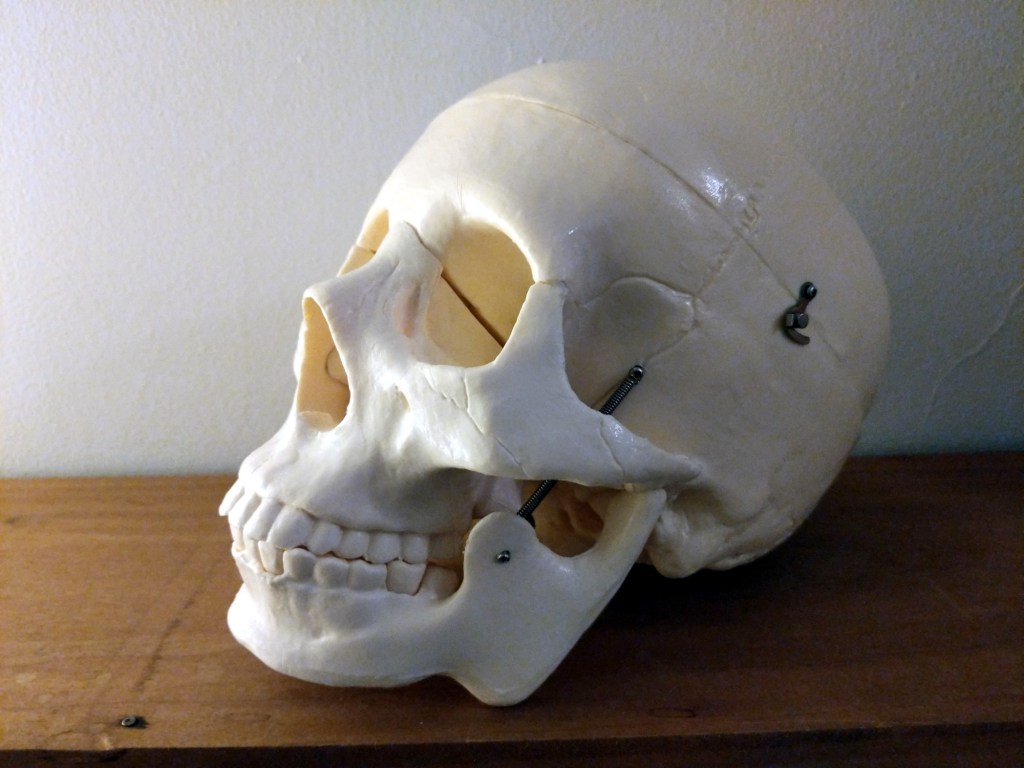
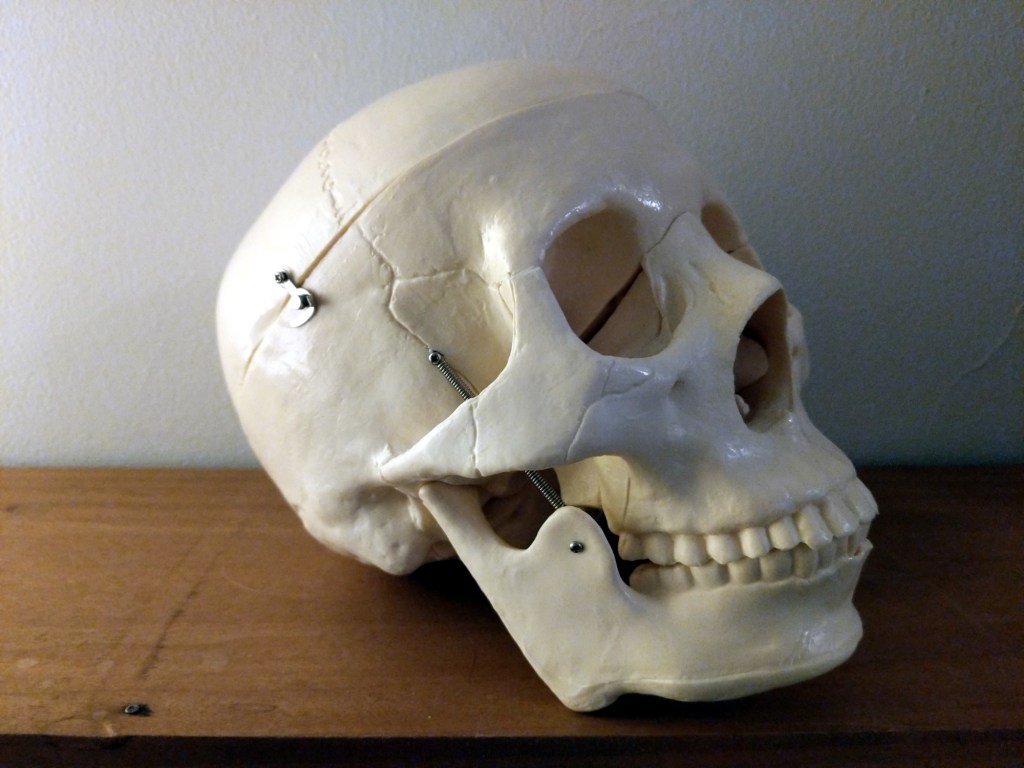
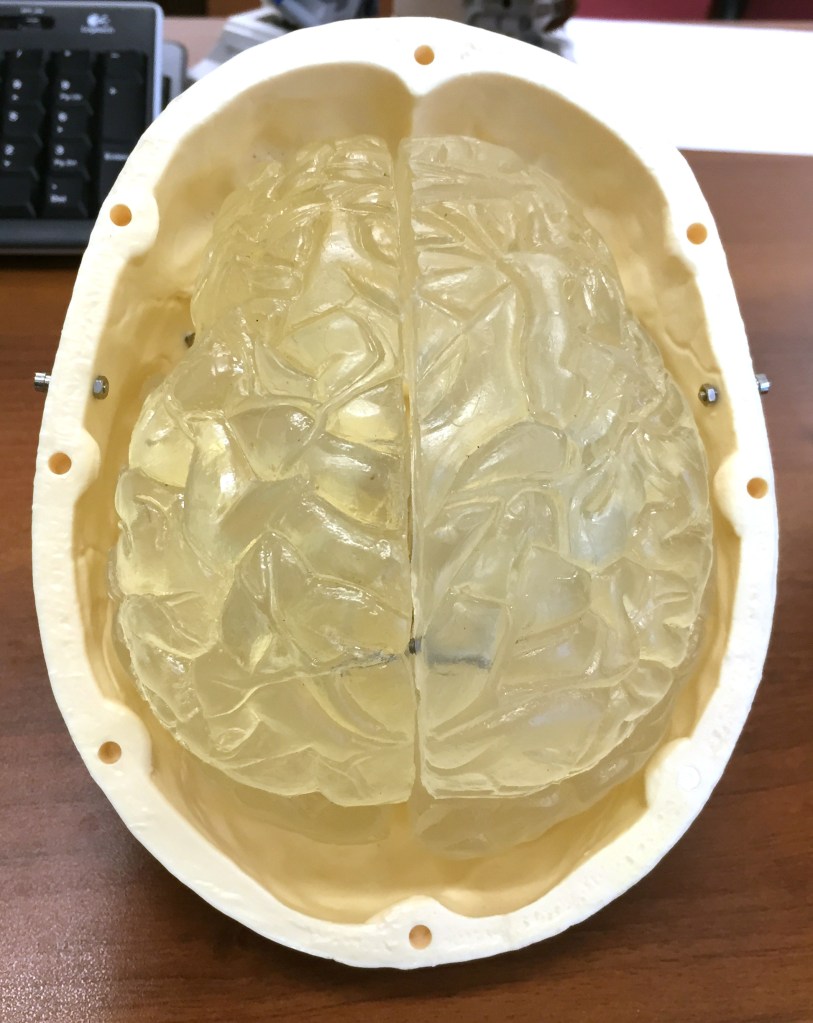
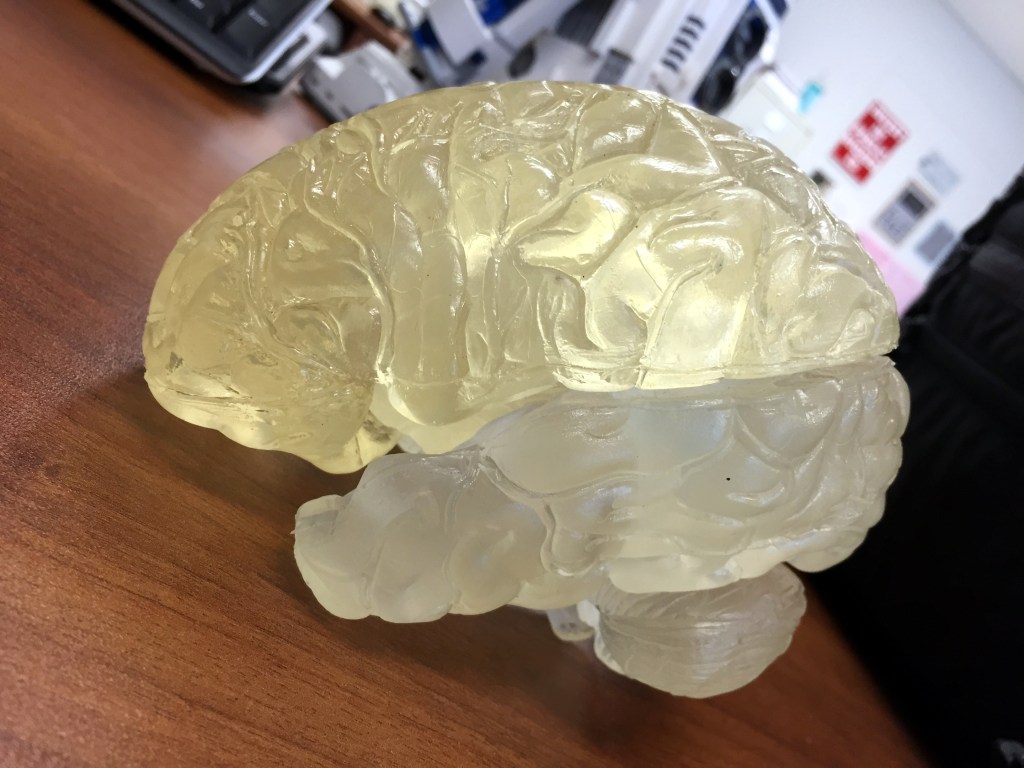
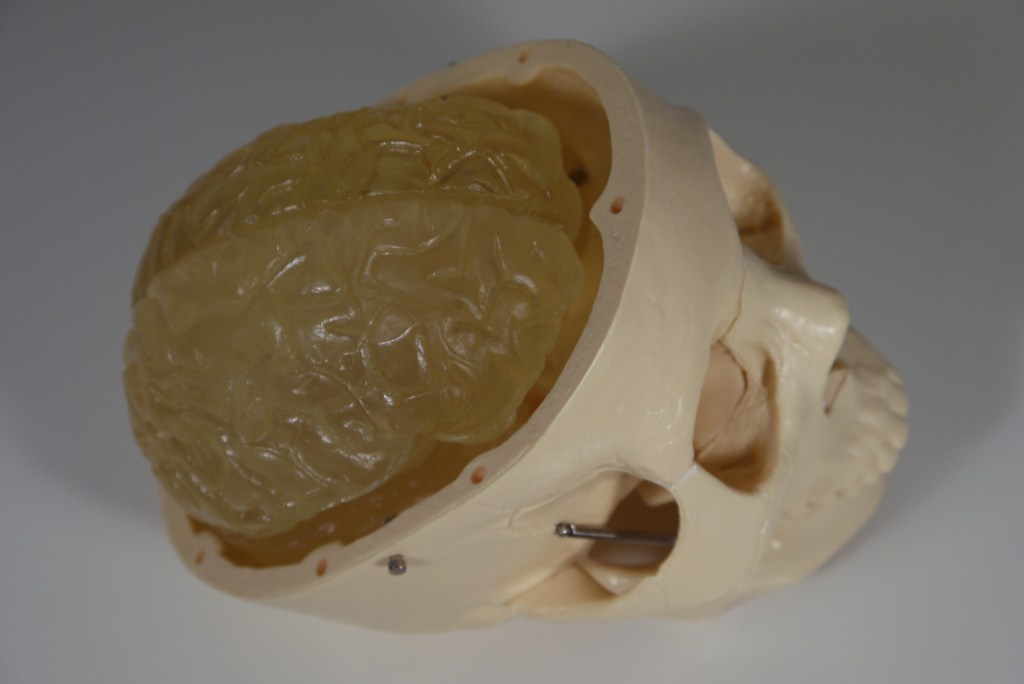
I bring my trusted skull and brain model nicknamed Yorick to my writing and science fiction classes when I want to talk about something related to cognition–e.g., how our attentional focus works, cognitive costs of switching cognitive tasks, time delay from sensory perception to processing to conscious awareness, where are the speech regions–Broca’s area and Wernicke’s area–located, etc. Yorick’s skull and multi-component brain gives students something that they can see and feel and manipulate when it gets passed around the classroom.
And when students leave a hat behind, Yorick gets a treat.
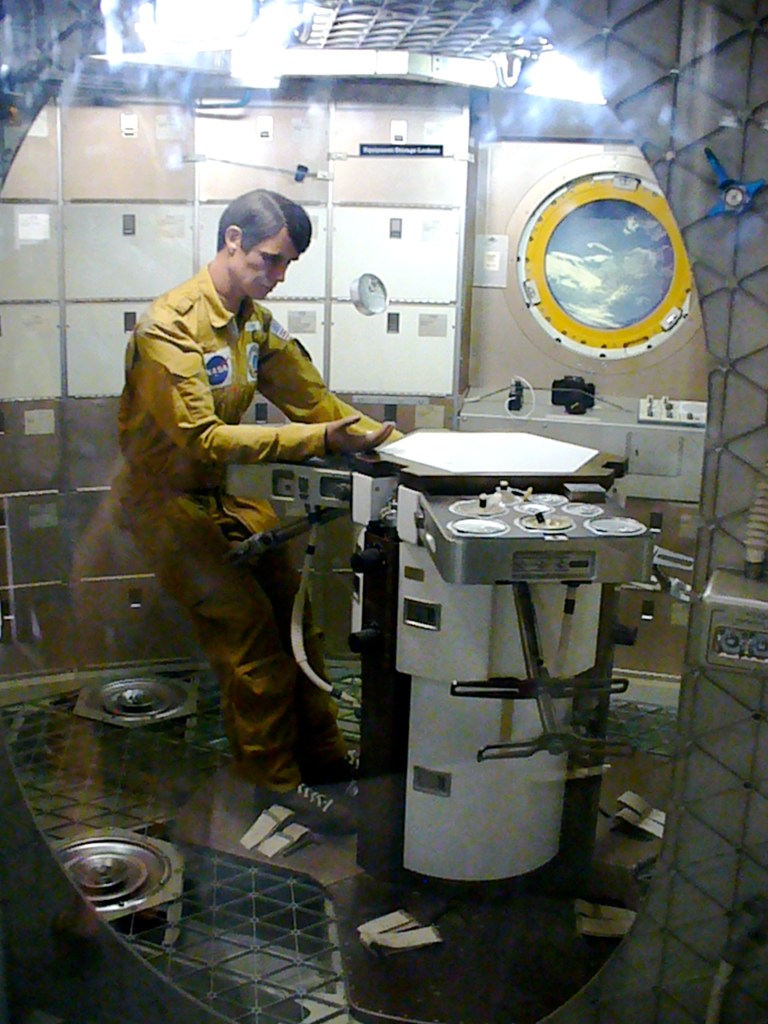
Skylab Orbital Workshop Interior, Smithsonian Air and Space Museum, Washington, DC. Photo taken in 2008.
As I wrote last week here, I reached out to Steve Lenzen via postal mail about Space Station L-4, the Earth Sciences Educational Program from 1977, after I found his contact information on an archived version of GPN’s website. He worked at GPN from 1976 to 2006, and he co-founded Destination Education. He kindly replied to me via email with important details about the history of GPN and why it might be impossible to find a copy of the series. He explains:
"The series was produced by Children's Television International, which was owned by Ray Gladfelter. When Ray was "winding down" his career, GPN took over distribution because Ray was an old friend of our director at the time. When Ray died, many, many years ago his old friend had also retired and GPN ceased distribution. Actually, GPN had ceased distribution years before that because there was no demand."

"Back when Ray produced the series many or most of the PBS Stations broadcast programs specifically designed for use in the classroom. This mode of getting educational programming into the classroom was started before the age of VHS and Betamax. The introduction of Betamax and then VHS is what led to the "death" of 16mm film and subsequently PBS stations airing a block of programs designed specifically for in classroom use. Starting in the late 80's, teachers were demanding that PBS Stations air only new, up-to-date programs depicting current hair styles, clothes, etc. If a series did not meet this criteria, teachers did not want it."

"Due to the lack of storage space, once a series was pulled from distribution GPN destroyed the submaster it had. The copyright holder/producer usually had a master. Space Station L-4 was pulled out of distribution long before advent of DVD which meant it cost of lot of money to keep old master, usually 2" Quad, 1" Helical, or Betamax in storage. As a result, the copyright owner also destroyed their copy."

"After Ray's death, his son . . . took control of Children's Television International. . . . The company, CTI, was, out of business by then so all he could do was find a place to give the tapes or destroy them."
My next move is to reach out to Ray Gladfelter’s son. I will report back with any developments.
From L to R: V-2 Rocket, WAC Corporal Sounding Rocket, Skylab Orbital Workshop, and V-1 Cruise Missile (hanging), National Air and Space Museum, Washington, DC, 2008.
My friend Mark and I have been on a decade’s long quest to find copies of Space Station L-4 (1977), an educational Earth Sciences television program produced, written, and directed by Paul Lally, who I interviewed in 2013 about the show, and distributed by Children’s Television International (CTI).
Unfortunately, we have not yet been able to obtain copies of Space Station L-4.
Obvious starting places like Google, YouTube, Bing, Yandex, etc. yield no video, screenshots, or substantive information.
I’ve tried interlibrary loan requests without any success.
Most recently, I discovered video order directories including Bowker’s Complete Video Directory and The Video Source Book in the Internet Archive that list the series and individual episodes, which were available for order from CTI in Virginia (apparently no longer exists and a more recent San Diego address seems defunct but there is a branch of this organization that seems to remain incorporated in Maryland) and GPN in Lincoln, NE (also no longer exists–the owner retired). I am sending letters to the agent listed for the Maryland branch of CTI and Steve Lenzen of GPN in the hope of them having stock available or a reference to who might have tapes for sale.
Below, I’m pasting the series and episode information from Bowker’s Complete Video Directory 1998, pp. 2158-2159 in the hope that it might lead someone with info about how to obtain the series to my website and who would be kind enough to reach out by email to my address in the info box to the right or via my social media links on the About page.
Space Station L-4. 16 cass. (1977). Science—Environmental Studies. 240 min. Rights: Group; Broadcast. Viewers imagine themselves on space station L-4, 440 miles above the earth. Their mission: to study & monitor life support systems for planet Earth & share this information with all countries needing assistance. By dramatically demonstrating modern equipment, techniques & methods of scientific investigation this video teaches how we are seeking to safeguard the future of our natural environment & prepare for human survival. GPN. tchr's. guide: $3.50; VHS, Set (Order #: E374):
$351.20.

Space Station L-4, Vol. 1: The Changing Earth; Earth Measurement; Atmosphere; Water. Science—General. B&W and Color. 60 min. Juvenile.Ages: 9-13. G. Made-for-Video Movie. Children’s Television International. VHS (Order #: ST-1): $79.95.

Space Station L-4, No. 1: The Changing Earth. (1977). Science—Environmental Studies. 15 min, Rights: Group; Broadcast. Develops an awareness within students that the earth is constantly changing. GPN. tchr's. guide: $3.50; VHS (Order #: E374): $29.95.

Space Station L-4, Vol. 2: Soil; Earth Limits; Energy; Gravity. Science—General. B&W and Color. 60 min. Juvenile.Ages: 9-13. G. Made-for-Video Movie. Children’s Television International. VHS (Order #: ST-2): $79.95.

Space Station L-4, No. 2: Earth Measurement. (1977). Technology. 15 min. Rights: Group; Broadcast. Demonstrates how technological advances enable us to increase the accuracy of measurements. GPN. tchr’s. guide: $3.50; VHS (Order #: E374): $29.95.

Space Station L-4, Vol. 3: Human Life Support; ‘Human Communication; The Order of Nature; Cycles. Science—General. B&W and Color. 60 min. Juvenile Ages: 9-13. G. Made-for-Video Movie. Children's Television International. VHS (Order #: ST-3): $79.95.

Space Station L-4, No. 3: Atmosphere. (1977). ‘Science—Environmental Studies. 15 min. Rights: Group; Broadcast. Helps students understand the effects of the interaction between the earth's surface & living things. GPN. tchr's. guide: $3.50; VHS (Order #: E374): $29.95.

Space Station L-4, Vol. 4: Things in Motion; Reach ‘Up; Reach Out; Reach Far Out. Science—General. B&W and Color. 60 min. Juvenile. Ages: 9-13. G. Made-for-Video Movie. Children’s Television International. VHS (Order #: ST-4): $79.95.

Space Station L-4, No. 4: Water. (1977). Science—Environmental Studies. 15 min. Rights: Group; Broadcast. Presents the interrelationship between water, the earth's surface & living things. GPN. tchr’s. guide: $3.50; VHS (Order #: E374): $29.95.

Space Station L-4, No. 5: Soil. (1977). Science—Environmental Studies. 15 min. Rights: Group; Broadcast. Continues to demonstrate the interrelationship to ecology by looking at how soil, water & living things affect each other. GPN. tchr’s. guide: $3.50; VHS (Order #: E374): $29.95.

Space Station L-4, No. 6: Earth Limits. (1977). Science—Environmental Studies. 15 min. Rights: Group; Broadcast. Shows students that the earth & its components are finite resources. GPN. tchr's. guide: $3.50; VHS (Order #: E374): $29.95.

Space Station L-4, No. 7: Energy. (1977). Science—Environmental Studies. 15 min. Rights: Group; Broadcast. Reveals that the sun is our energy source. GPN. tchr’s. guide: $3.50; VHS (Order #: £374): $29.95

Space Station L-4, No. 8: Gravity. (1977). Science—General. 15 min. Rights: Group; Broadcast. Shows students how man & his environment are both affected by gravity. GPN. tchr's. guide: $3.50; VHS (Order #: E374): $29.95.

Space Station L-4, No. 9: Human Life Support. (1977). Science—Environmental Studies. 15 min. Rights: Group; Broadcast. Makes us aware that we all interact with our environment. GPN. tchr’s. guide: $3.50; VHS (Order #: E374): $29.95.

Space Station L-4, No. 10: Human Communications. (1977). Anthropology. 15 min. Rights: Group; Broadcast. Develops an awareness of humans as communicators. GPN. tchr's. guide: $3.50: VHS (Order #: E374): $29.95.

Space Station L-4, No. 11: The Order of Nature. (1977). Science—Environmental Studies. 15 min. Rights: Group; Broadcast. Promotes the observable patterns in nature. GPN. tchr’s. guide: $3.50; VHS (Order #: E374): $29.95.

Space Station L-4, No. 12: Cycles. (1977). Science—Environmental Studies. 15 min. Rights: Group; Broadcast. Develops student understanding of physical & biological cycles that naturally occur. GPN. tchr’s. guide: $3.50; VHS (Order #: E374): $29.95.

Space Station L-4, No. 13: Things in Motion. (1977). Science—-Environmental Studies. 15 min. Rights: Group; Broadcast. Helps students understand that we increase our use of fuels as we explore space. GPN. tchr's. guide: $3.50; VHS (Order #: E374): $29.95.

Space Station L-4, No. 14: Reach Up. (1977). Science—Environmental Studies. Exploration. 15 min. Rights: Group, Broadcast. Demonstrates how we have increased our knowledge of the environment through space exploration. GPN. tchr's. guide: $3.50; VHS (Order #: E374): $29.95.

Space Station L-4, No. 15: Reach Out. (1977). Science—Environmental Studies. Space Exploration. 15 min. Rights: Group; Broadcast. Enables viewers to better understand how our explorations of space have actually changed the dimensions of environmental research. GPN. tchr's guide: $3.50; VHS (Order #: E374): $29.95

Space Station L-4, No. 16: Reach Far Out. (1977). Science—Astronomy. Space Exploration. 15 min. Rights: Group; Broadcast. Takes viewers one step further in the search & inquiry process by showing how we are looking for life in outerspace. GPN. tchr’s. guide: $3.50; VHS (Order #:E374): $29.95.
If you know where I might find a copy of Space Station L-4, please send me an email at my address to the right or via my social media links on the About page. Thank you!
Since posting the original version of my Generative Artificial Intelligence (AI) and Pedagogy Bibliography and Resource List in April 2023, I have continued to add resources that I find through my research and daily online reading. I’ve added 61 articles and books to the bibliography since August 2023 for a total of 382 MLA-formatted references. Also, it has 55 online groups and resources linked at the bottom. Whenever you access the bibliography, you can check the bottom of the page to see if I’ve recently updated it–I always add the date for any updates.
I hope that the bibliography might be useful to you! If there’s something that my bibliography is missing, send me an email (details in the “Who is Dynamic Subspace” widget to the right) or connect with me on social media (links on my About page).